
Blog
The Complete Guide to Cigar Humidors in Canada

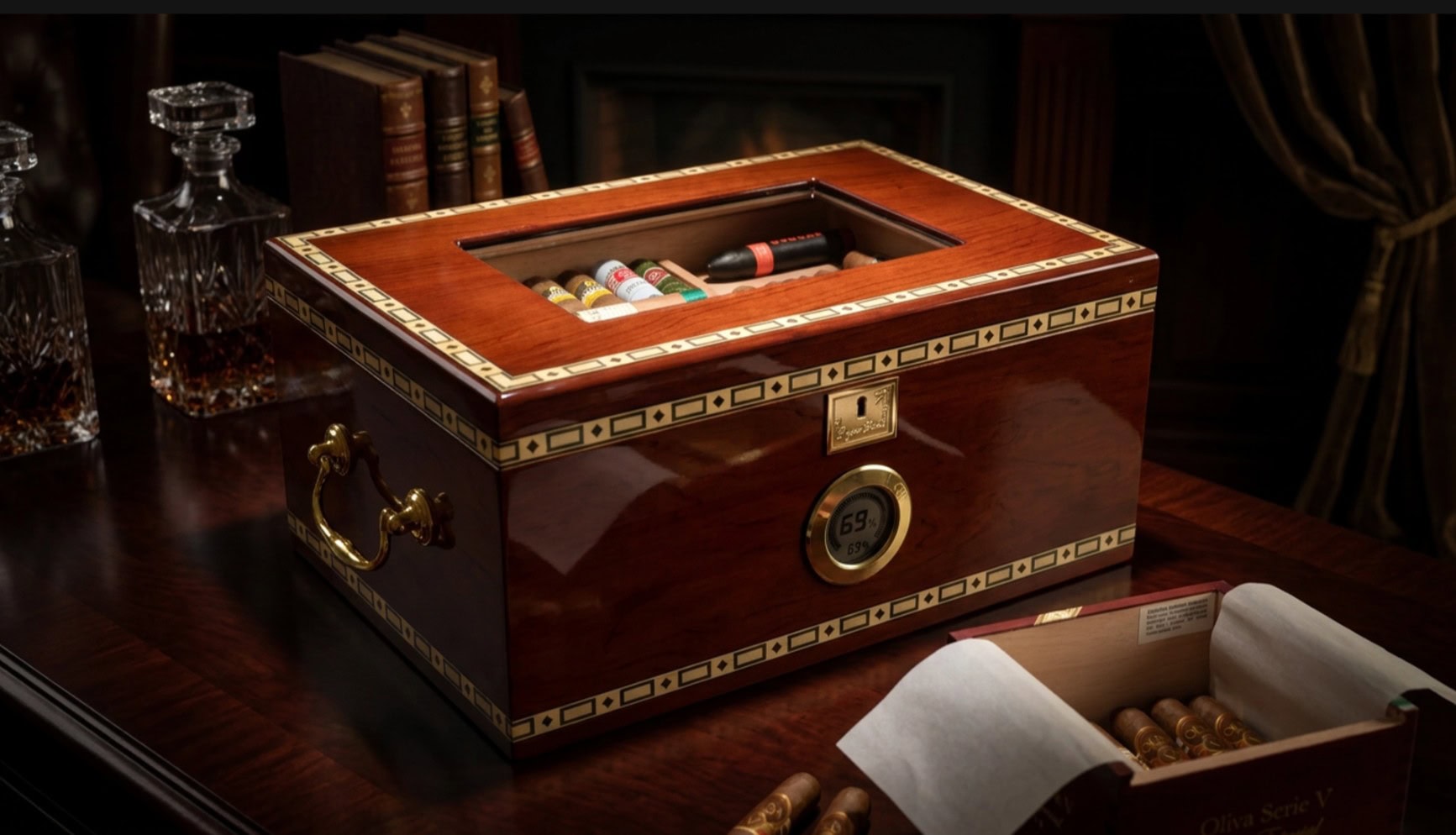
The Complete Guide to Cigar Humidors in Canada
How to Store, Protect and Enjoy Your Cigars Year-Round
2026–2027 Canadian Edition
If you enjoy premium cigars, you already know that buying a great cigar is only half the equation.
The other half is how you store it.
A premium cigar can be beautifully constructed, perfectly rolled and packed with flavour, but if it is stored in an environment that is too dry, too humid, too hot or constantly changing, its performance can suffer.
And if you live in Canada, cigar storage presents a challenge that cigar smokers in many other parts of the world don’t have to deal with to the same degree:
Our seasons can be brutal.
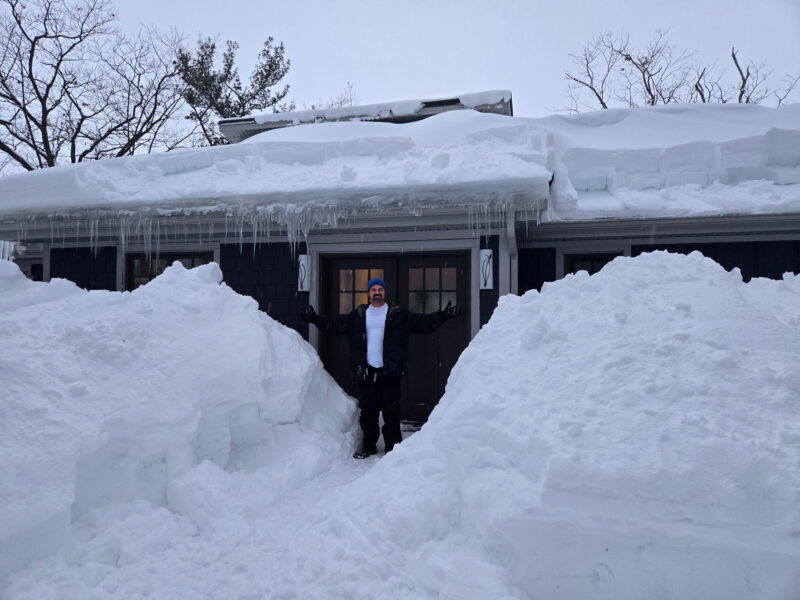
Canadian winters can create extremely dry indoor conditions. Summer can bring the opposite problem, high heat and humidity. Add central heating, air conditioning, fireplaces, windows, temperature fluctuations and the occasional forgotten humidor sitting beside a heat vent, and maintaining a stable environment for your cigars becomes a little more complicated.
At Cigar Star, we’ve spent more than two decades of designing, building, selling and helping customers maintain cigar humidors and accessories.
We’ve learned that successful cigar storage doesn’t require making things complicated.
It requires understanding a few fundamentals:
Humidity. Temperature. Airflow. A good seal. Proper seasoning. Accurate measurement. And consistency.
This guide explains all of them.
Table of Contents
- What Does a Humidor Actually Do?
- What Humidity Is Best for Cigars?
- 65%, 69% or 72% RH — Which Should You Choose?
- Why Canadian Winters Are Hard on Cigars
- Storing Cigars During a Canadian Summer
- Why Spanish Cedar Is Used in Cigar Humidors
- How to Season a New Wooden Humidor
- Hygrometers: Digital vs. Analog
- Choosing a Humidification System
- How Big Should Your Humidor Be?
- Glass-Top vs. Solid-Top Humidors
- How to Arrange Cigars Inside Your Humidor
- How to Troubleshoot Humidity Problems
- How to Know If Your Cigars Are Too Dry
- How to Know If Your Cigars Are Over-Humidified
- How to Tell if Your Humidor Has a Seal Problem
- Cigar Travel: Leather Cases vs. Travel Humidors
- How to Maintain Your Humidor
- Common Humidor Mistakes
- Frequently Asked Questions
- The Cigar Star Approach to Cigar Storage
1. What Does a Humidor Actually Do?
A cigar humidor is designed to create a controlled environment for storing cigars.
The goal isn’t simply to make the inside of a box “humid.”
The goal is to maintain a stable relative humidity (RH) that helps preserve the cigar’s moisture content, oils, aroma, construction and smoking characteristics.
Premium cigars contain natural tobacco oils and moisture. If they become excessively dry, the tobacco can become brittle and the cigar may burn hotter and faster than intended.
If they become excessively humidified, the opposite can happen. A cigar can become difficult to light, difficult to keep burning and may produce a heavier, less enjoyable smoke.
The humidor’s job is to slow down these changes and create a stable environment.
Think of your humidor as a climate-controlled home for your cigars.
And just like your home, the quality of that environment matters.
A good humidor should provide:
- Stable relative humidity
- Reasonably stable temperature
- A reliable seal
- Appropriate interior materials
- Consistent humidification
- Protection from sunlight and heat
- Enough room for the cigars to breathe
The better those factors are controlled, the less work you have to do.
2. What Humidity Is Best for Cigars?
This is probably the question we hear most often:
“What humidity should I keep my cigars at?”
The honest answer is:
There isn’t one RH percentage that every cigar smoker must use.
Your ideal level depends on your cigars, your humidor, your environment and even your personal smoking preference.
For many premium cigar smokers, the practical target range is roughly 65%–72% RH.
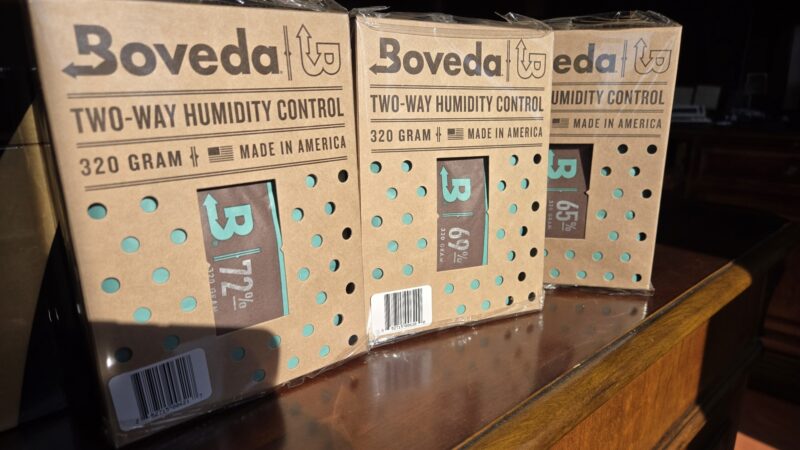
Boveda, one of the most widely used humidity-control manufacturers in the cigar industry, identifies 69% RH as its most universal cigar-storage option, while 65% and 72% are used for specific preferences and conditions.
The important word is stable.
A humidor that stays consistently around your chosen RH is generally preferable to one bouncing dramatically between humidity levels.
3. 65%, 69% or 72% RH — Which Should You Choose?
Let’s simplify it.
65% RH
Best for:
- Smokers who prefer a slightly drier cigar
- Those looking for an easier burn
- Certain long-term aging preferences
- Situations where cigars are becoming overly humidified
- Cuban cigars seem to like lower humidity levels than other regions
A 65% environment generally produces a somewhat drier cigar profile.
Some smokers prefer this because they find the cigar burns more easily and produces the flavour profile they enjoy.
69% RH
The best starting point for most cigar smokers
69% RH is an excellent general-purpose target for premium cigar storage.
It works well for many:
- Wooden humidors
- Acrylic humidors
- Airtight storage
- Travel humidors
- Larger collections
- Long-term cigar storage
Boveda identifies 69% RH as its most popular/general cigar-storage level.
If you’re new to cigar storage and don’t know where to begin:
69% RH is a very sensible starting point.
72% RH
72% RH can be useful when you’re dealing with:
- A drier environment
- A humidor that struggles to maintain humidity
- A less-than-perfect seal
- Certain wooden humidors
- Seasonal conditions
This is particularly relevant in Canada during the winter.
Boveda specifically identifies 72% RH as a specialty solution for drafty humidors and dry environments.
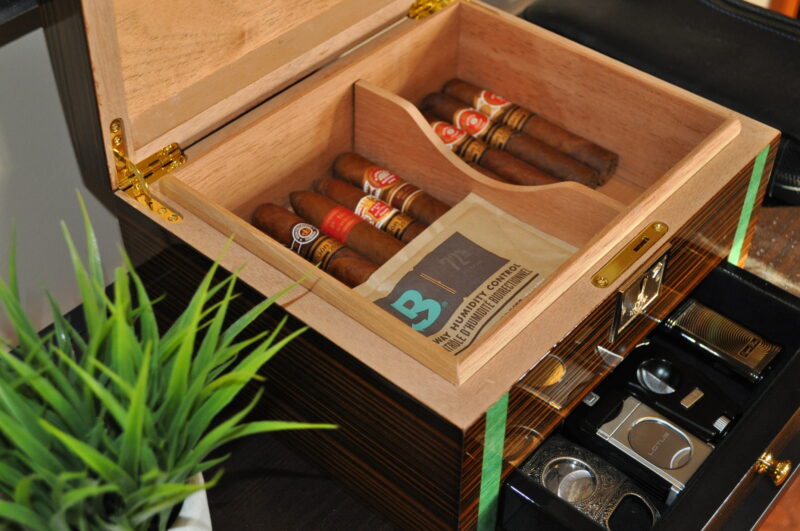
Being Canadian all our limited edition humidors come with 72% Boveda starter kits because we know how our climate is!
One important rule:
Don’t mix different RH levels in the same humidor.
Choose your target and allow the humidor to stabilize rather than putting 65%, 69% and 72% products together.
Boveda also advises against mixing its products with other humidification products because the systems can work against one another.
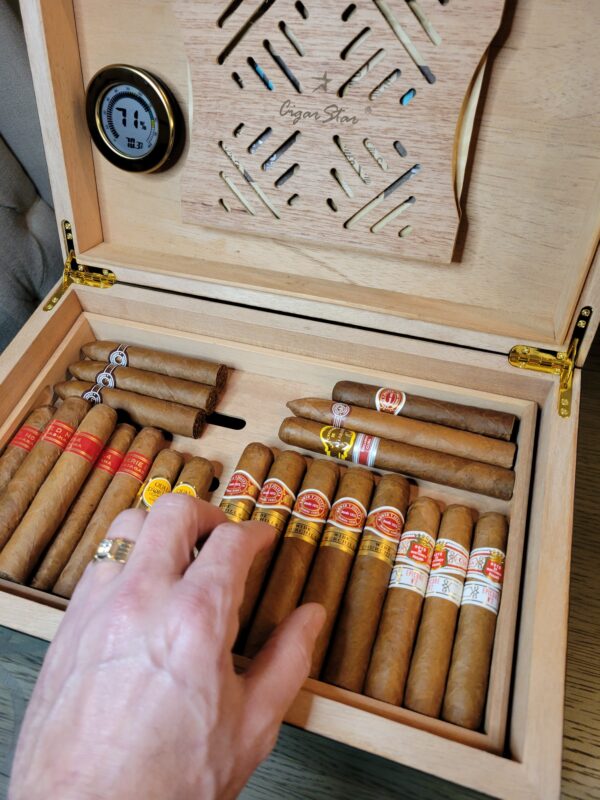
4. Why Canadian Winters Are Hard on Cigars
If you live in Ontario, Quebec, Alberta, Manitoba or almost anywhere else that experiences a real Canadian winter, you already know what happens when the furnace starts running.
Everything dries out.
Your skin.
All your furniture.
The houseplants.
And potentially your cigars.
Cold outdoor air holds less moisture. When that cold air enters a heated home, the resulting indoor environment can become very dry.
Health Canada recommends considerably lower indoor RH during winter than the RH we maintain inside a cigar humidor, around 30% in winter for household conditions, to help control mould growth.
Your cigar humidor, however, needs a much more humid environment.
That means the humidor is fighting against the surrounding room.
This is why winter can expose problems you didn’t notice during summer.
A humidor that performed perfectly from May through October might suddenly struggle in January.
You may notice:
- RH dropping faster
- Humidification products drying out faster
- More frequent RH fluctuations
- Dry cigar wrappers
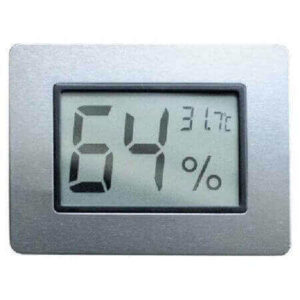
- A hygrometer reading below your normal target
- A humidor that suddenly seems impossible to keep humidified
This doesn’t necessarily mean your humidification system has failed.
The environment may simply have changed dramatically.
Canadian Winter Humidor Tips
1. Keep the humidor away from heat sources
Don’t put your humidor:
- Beside a furnace vent
- Beside a fireplace
- Directly above a radiator
- Beside a space heater
- In direct sunlight
2. Don’t keep opening it unnecessarily
Every time you open the lid, you’re exchanging the controlled air inside the humidor with the air in your home.
Checking your cigars constantly isn’t helping them.
3. Monitor your RH
A reliable hygrometer lets you identify changes before your cigars are affected.
4. Check the seal
A small leak that wasn’t significant during summer can become a much bigger problem during a dry Canadian winter.
5. Consider your humidification strategy
A good humidity-control system can make winter storage significantly easier.
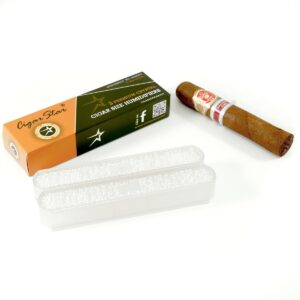
Cigar Star recommends adding one of our cigar-size polymer humidifiers inside your humidor to help take some of the pressure off maintaining RH during the dry Canadian winter months.
5. Storing Cigars During a Canadian Summer
Canadian summer creates the opposite challenge.
Outdoor humidity can become very high, and air conditioning can create another set of environmental changes.
Your humidor should not be treated as a miniature refrigerator.
Instead, keep it somewhere with a relatively stable room temperature and away from direct environmental swings.
Avoid:
- Direct sunlight
- Open windows
- Air-conditioning vents
- Hot garages
- Attics
- Extremely hot rooms
Boveda recommends keeping the room containing your humidor away from open windows, air-conditioning vents and direct sunlight and maintaining a reasonably stable room temperature.
The goal isn’t perfection.
The goal is stability.
6. Why Spanish Cedar Is Used in Cigar Humidors
Open a quality cigar humidor and you’ll often notice something immediately:
That unmistakable cedar aroma.
Spanish cedar has been associated with cigar storage for generations.
It is valued for several reasons, including its ability to interact with moisture and its characteristic aroma.
It also creates the traditional environment many cigar enthusiasts associate with premium cigar storage.
Spanish cedar can help:
- Buffer moisture changes
- Contribute to the humidor’s internal environment
- Protect the cigars
- Provide the traditional cedar aroma
- Create an attractive interior
But Spanish cedar doesn’t magically make a humidor work.
A humidor still needs:
A good seal + appropriate humidification + accurate measurement + proper maintenance.
Think of Spanish cedar as one component of the system—not the entire system.

7. How to Season a New Wooden Humidor
One of the biggest mistakes new cigar smokers make is buying a beautiful wooden humidor, putting their cigars inside immediately and wondering why the humidity is all over the place.
A new wooden humidor needs to be properly conditioned before storing cigars.
Why?
The wood itself can absorb moisture.
If you place cigars into a completely dry wooden humidor, the wood can pull moisture from the cigars while it reaches equilibrium.
That’s not what you want.
The Traditional Wipe-Down Method
You may have heard of wiping the interior with distilled water. Cigar Star did a video on this method 16 years ago on Youtube.
How to season a new Cigar Star Humidor Cigar Humidor
This method has been used for years, but it can be difficult to control and may introduce moisture unevenly.
Modern humidity-control products provide a more controlled alternative.
Boveda recommends using 84% RH seasoning packs in an empty wooden humidor and leaving them closed for 14 days.
We also published a video demonstrating this method when we partnered with Boveda for our Limited Edition Humidors five years ago.
How To Set Up Your Cigar Humidors with Boveda Packs | Cigar Star
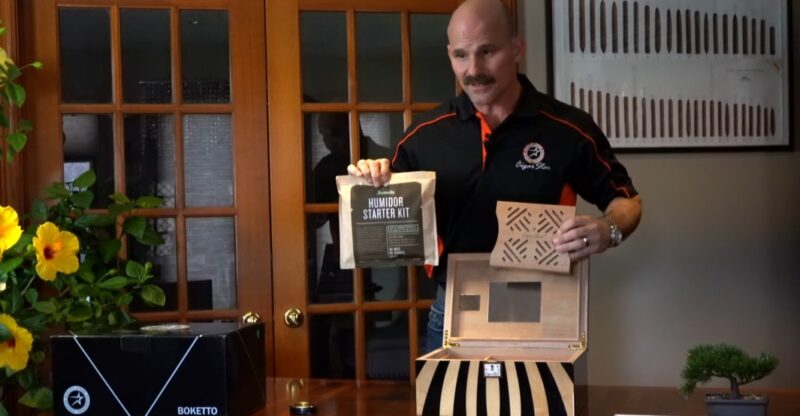
Boveda’s seasoning process:
- Remove cigars from the humidor.
- Place the appropriate 84% seasoning packs inside.
- Close the humidor.
- Leave it closed for the recommended 14-day period.
- Remove the seasoning packs.
- Add your regular cigar-storage humidity-control product.
- Add your cigars.
Boveda specifically says the 84% product is for seasoning empty wooden humidors—not storing cigars.
Important:
Don’t put cigars inside while you’re seasoning the humidor.
Season first.
Cigars second.
8. Hygrometers: Digital vs. Analog
A hygrometer tells you what’s happening inside your humidor.
Without one, you’re essentially driving without a dashboard.
You may get lucky.
But why?
Digital Hygrometers
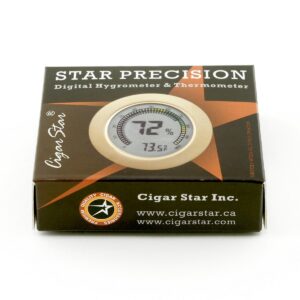
Digital hygrometers are generally:
- Easy to read
- Compact
- Convenient
- Simple to monitor
- Available in highly accurate models
For most modern cigar smokers, a good digital hygrometer is an excellent choice.
Analog Hygrometers
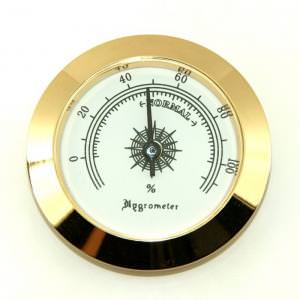
Traditional analog hygrometers have a classic appearance and can look fantastic in a traditional wooden humidor.
However, appearance and accuracy aren’t the same thing.
If your analog hygrometer hasn’t been calibrated, its reading may not be trustworthy.
Always Calibrate Your Hygrometer
This is one of the most overlooked steps in cigar storage.
If your hygrometer says:
69%
you need to know that it actually means something close to 69%.
Otherwise, you’re making decisions based on bad information.
Boveda recommends calibrating hygrometers using its calibration system and specifically identifies calibration as an important troubleshooting step when RH readings fluctuate.
Over the years, we’ve published videos on our YouTube channel showing how to calibrate both analog and digital hygrometers.
How to calibrate a Cigar Star analog cigar Hygrometer.AVI
HOW TO CALIBRATE YOUR DIGITAL HYGROMETER | CIGAR STAR
Remember:
An inaccurate hygrometer can make a perfectly good humidor look broken.
9. Choosing a Humidification System → Can You Combine Humidification Systems?
There are several ways to humidify cigars.
The important thing is to choose a system that matches your humidor and your lifestyle.
Boveda Humidity Packs
Boveda uses two-way humidity control.
When the environment needs moisture, the pack releases moisture.
When there is excess moisture, it absorbs moisture.
For cigar storage, Boveda currently offers several RH options, including 65%, 69%, 72% and others designed for specific applications.
For most cigar smokers, 69% is a straightforward starting point.
Polymer Crystal Humidifiers
Polymer crystal humidifiers are another popular option.
The crystals absorb water and release moisture gradually into the humidor.
At Cigar Star, we’ve developed polymer crystal humidification products specifically to provide a compact source of humidity without taking up a large amount of valuable cigar-storage space.
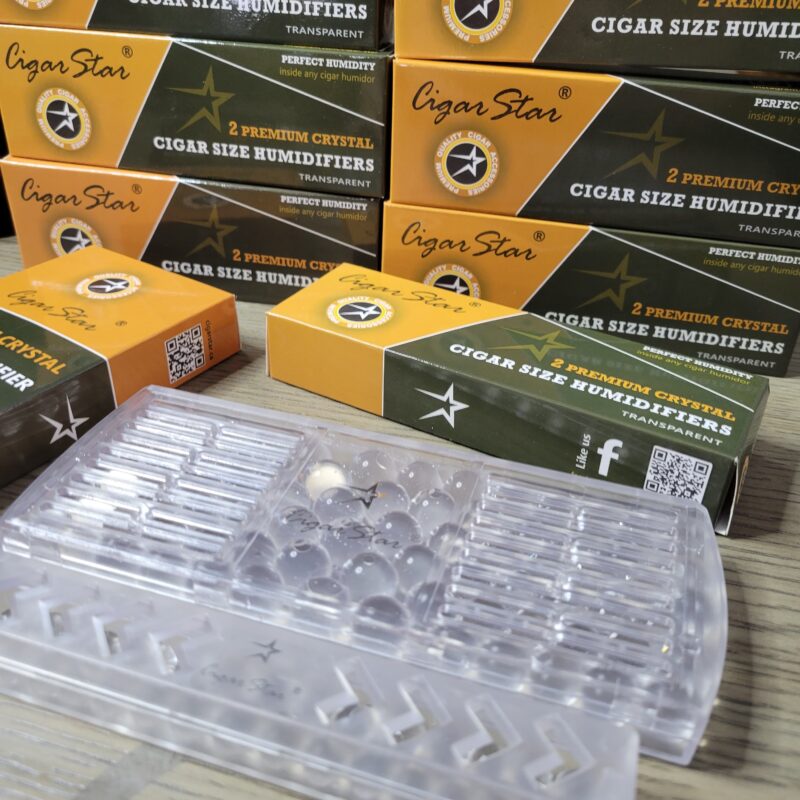
They’re particularly useful when space is limited.
Electronic Humidification
Electronic humidification systems can make sense for:
- Large humidors
- Cabinets
- Wineador-style setups
- Large collections
- Smokers who want automated control
They’re more expensive and require power, but for larger collections they can be extremely convenient.
Can You Combine Humidification Systems?
This is an area where you should be careful.
If you’re using a two-way humidity-control system such as Boveda, don’t simply throw several different humidification products into the same humidor without understanding how they interact.
Boveda specifically advises against using its products with other humidification products because they can work against each other.
At Cigar Star, our philosophy is simple: in very dry conditions, some cigar smokers use a polymer crystal humidifier alongside Boveda packs to provide an additional source of moisture. Because Boveda provides two-way humidity control, it can also absorb excess moisture as conditions change.
If you choose to use more than one humidification method, monitor your RH carefully and avoid adding more humidity than your humidor actually needs.
Monitor your RH and adjust based on what your humidor is actually doing.
10. How Big Should Your Humidor Be?
This is where people often buy the wrong humidor.
They think:
“I have 40 cigars, so I’ll buy a 40-count humidor.”
That sounds logical.
But cigar-count ratings aren’t always as straightforward as they seem.
Cigars come in different:
- Lengths
- Ring gauges
- Shapes
- Box configurations
And you don’t necessarily want to pack a humidor until there isn’t room to move anything.
Our recommendation:
Buy a little larger than your current collection.
If you currently own 25 cigars, you don’t necessarily need a 25-count humidor.
If you know you’re going to keep buying cigars—and let’s be honest, you probably are—buy for the collection you expect to have rather than the collection you have today.
General Humidor Size Guide
25-count
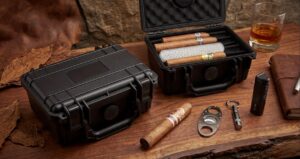
Good for:
- Beginners
- Small collections
- Apartment or condo storage
- Occasional smokers
50-count

A great all-purpose size.
Good for:
- Regular cigar smokers
- Moderate collections
- Home offices
- Gifts
100-count
Ideal for:
- Serious enthusiasts
- Larger collections
- Multiple cigar brands
- Long-term storage
150+ count
Best for:
- Established collections
- Serious enthusiasts
- Aging cigars
- Larger cigar inventories
Don’t forget:
Capacity is not everything.
Construction quality matters.
A well-sealed 50-count humidor can outperform a poorly sealed 100-count humidor.
11. Glass-Top vs. Solid-Top Humidors
This debate has been going on for years.
And both styles have advantages.
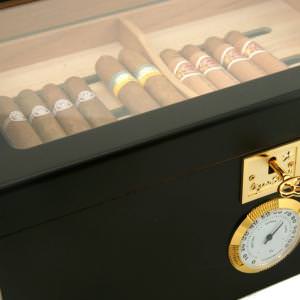
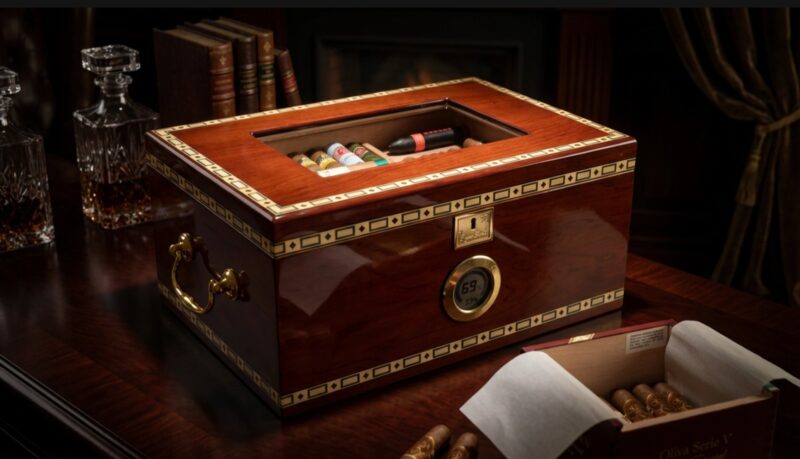
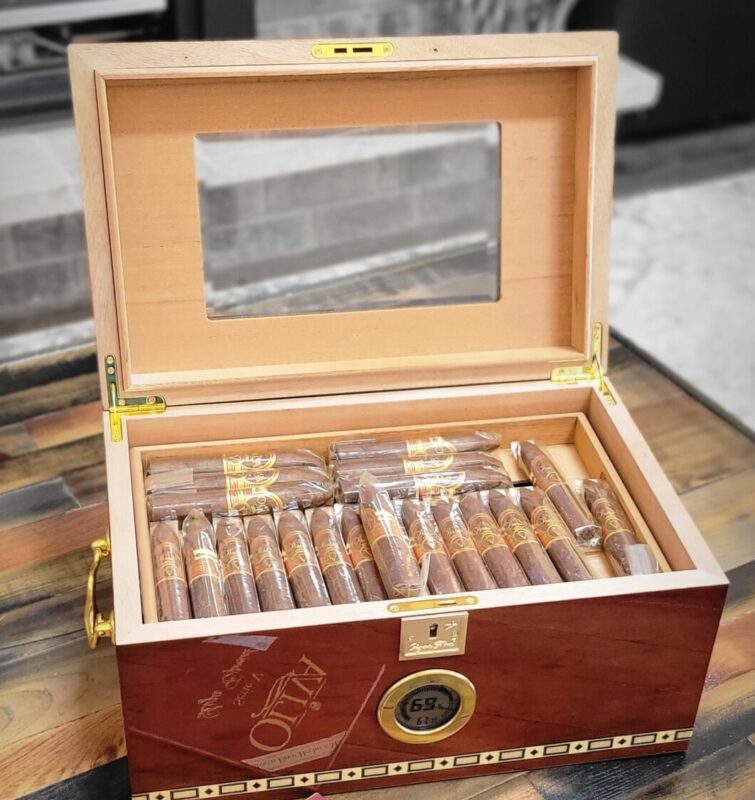
Glass-Top Humidor
Advantages:
- Lets you see your collection
- Beautiful presentation
- Easy to display premium cigars
- Excellent for showcasing a collection
Potential downside:
Glass can introduce additional considerations around heat and environmental exposure.
If your glass-top humidor is sitting in direct sunlight beside a window, that’s a problem.
A glass-top humidor needs to be treated like a cigar-storage device—not a display case for the sun.
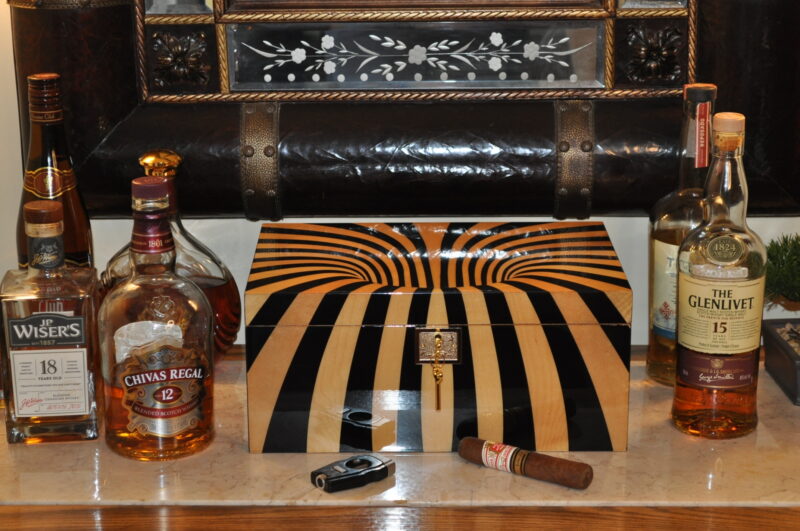
Solid-Top Humidor
Advantages:
- Traditional appearance
- Excellent protection from light
- Classic humidor design
- Often preferred for long-term storage
For many serious cigar collectors, a solid-top humidor remains the classic choice.
Which One Should You Buy?
If you love looking at your collection:
Glass top.
If you prioritize traditional storage and protection from light:
Solid top.
If both humidors are well made and properly maintained, either can work.
12. How to Arrange Cigars Inside Your Humidor
Don’t treat your humidor like a suitcase.
You don’t want to cram every available inch.
Allow the cigars to be organized and accessible.
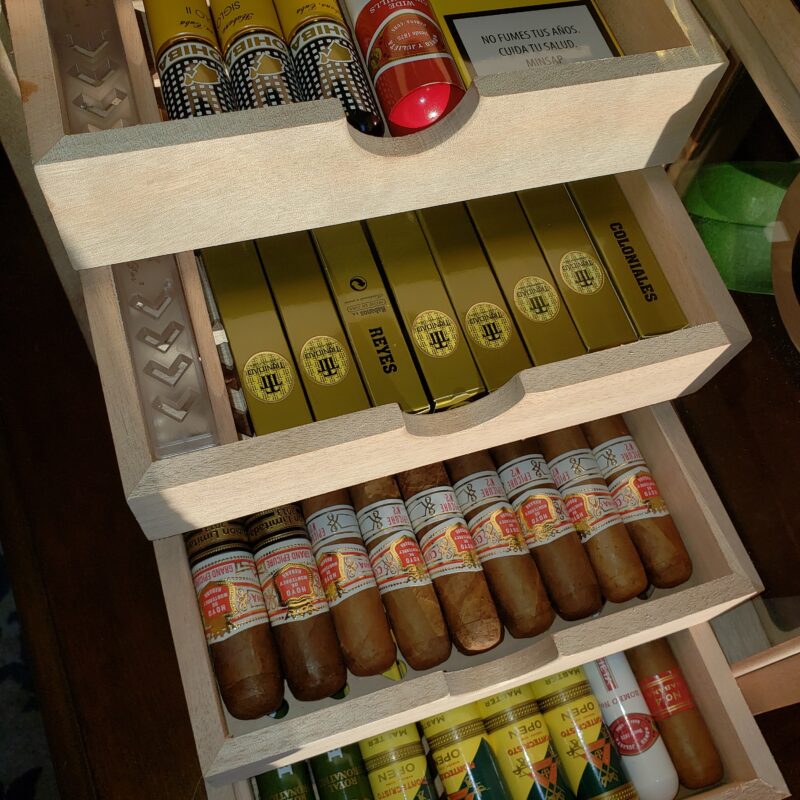
If your humidor contains trays, dividers or Spanish cedar racks, use them to organize different brands and sizes.
Consider organizing by:
- Brand
- Country
- Strength
- Ring gauge
- Size
- Intended smoking date
For larger collections, Spanish cedar trays can also help separate groups of cigars while making the collection easier to manage.

13. Troubleshooting Humidity Problems
Problem: RH Is Too Low
First ask:
Is the hygrometer accurate?
Calibrate it.
Then check:
- Humidor seal
- Humidification product
- Room conditions
- Heat sources
- How frequently you’re opening the humidor
- Whether the humidor was properly seasoned
During Canadian winter, environmental dryness may be the biggest factor.
Boveda specifically notes that drafty humidors and extremely dry ambient conditions can make maintaining RH more difficult.
Problem: RH Is Too High
First:
Don’t panic.
Check whether you have added too much humidification.
Then check:
- Hygrometer accuracy
- Room temperature
- Humidification product
- Whether cigars were recently added
- Whether the humidor has adequate air circulation
Don’t respond by immediately adding another humidity product.
That can make the problem worse.
Problem: RH Keeps Fluctuating
This is one of the most common issues.
Possible causes include:
- Opening the humidor frequently
- Adding a large number of cigars
- Poor seasoning
- Inaccurate hygrometer
- Poor seal
- Seasonal environmental changes
- Incorrect humidification
Boveda specifically lists hygrometer calibration, newly added cigars, seasoning, humidification quantity and RH selection among factors to investigate when RH fluctuates.
Problem: My Humidifier Dries Out Quickly
This can happen for several reasons.
Check the environment.
If your home is extremely dry, particularly during a Canadian winter, the humidor is constantly fighting the surrounding environment.
Check the seal.
A leak means you’re humidifying the room rather than the humidor.
Check the humidor’s size.
A larger humidor requires more humidity management.
Check how frequently you open it.
Every opening exchanges air.
14. How to Know If Your Cigars Are Too Dry
Dry cigars may show several warning signs.
You may notice:
- A brittle wrapper
- Cracking when the cigar is handled
- A faster burn
- Difficulty maintaining an even burn
- A harsher smoking experience
- Reduced aroma
Don’t assume every problem is caused by humidity, though.
Construction, tobacco blend, storage history and cigar age can also affect how a cigar smokes.
15. How to Know If Your Cigars Are Over-Humidified
An over-humidified cigar may:
- Feel unusually soft
- Be difficult to light
- Struggle to stay lit
- Burn unevenly
- Produce excessive smoke resistance
- Draw poorly
This is one reason “more humidity” isn’t necessarily better.
Your cigars don’t need to be wet.
They need to be properly conditioned.
16. How to Tell If Your Humidor Has a Seal Problem
A good seal is one of the foundations of a good humidor.
If you constantly struggle to maintain RH despite using an appropriate humidification system, investigate the seal.
Look for:
- Gaps around the lid
- Damaged seals
- Warped wood
- Loose hinges
- A lid that doesn’t close properly
The classic lid test
A properly constructed humidor lid should close with a controlled resistance rather than simply dropping shut.
If you’re constantly losing humidity, the problem may not be your humidifier.
It may be the box.
17. Cigar Travel: Leather Cases vs. Travel Humidors
A humidor at home is one thing.
Travel is completely different.
When you’re heading to:
- The golf course
- A cottage
- A friend’s house
- A resort
- A cigar lounge
- Another country
- A weekend away
you need portability.
Leather Cigar Cases
A premium leather cigar case is ideal when:
Style matters.
A quality full-grain leather case can protect your cigars while also giving you a sophisticated way to carry them.
Many cigar smokers also like having space for:
- Cutter
- Lighter
- Accessories
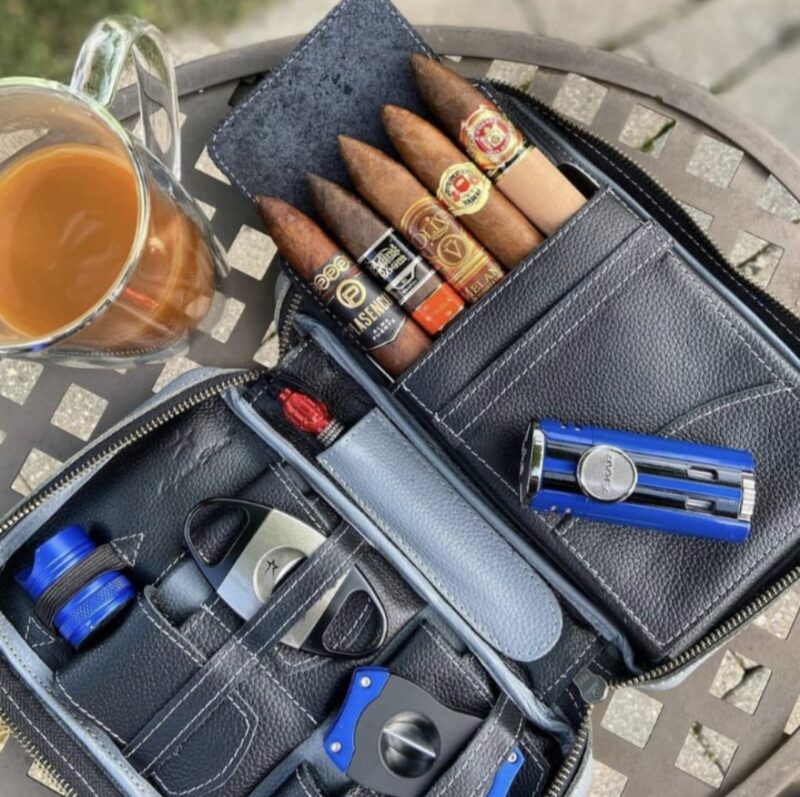
For a dinner, golf outing or evening with friends, a leather cigar case can be the perfect solution.
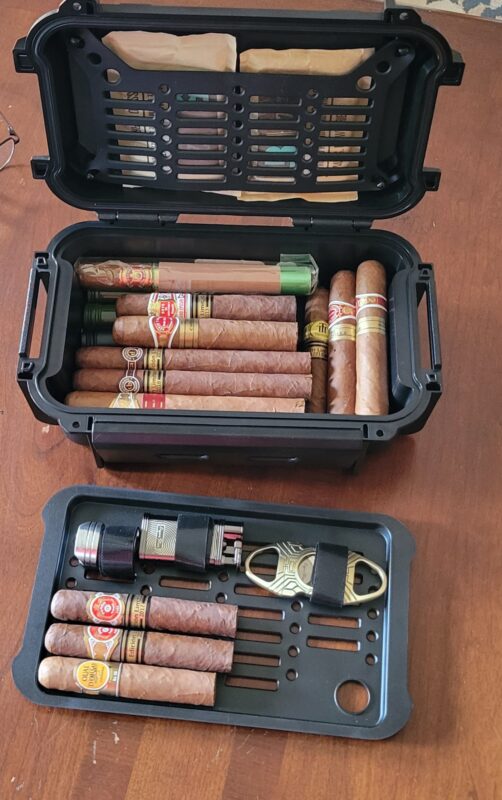
Hard Travel Humidors
A hard travel humidor is better when:
Maximum protection matters.
Hard cases can offer:
- Impact protection
- Airtight storage
- Water resistance
- Greater protection from temperature/environmental changes
- Space for multiple cigars
They’re particularly useful for:
- Flights
- Road trips
- Boating
- Camping
- Extended travel
The simple rule:
Leather case = style + convenience
Hard travel humidor = protection + longer-term travel storage
18. How to Maintain Your Humidor
Once your humidor is properly seasoned and operating correctly, maintenance should be relatively simple.
Every week or two:
Check:
RH
Temperature
Hygrometer
Humidification condition
You don’t need to obsess over it.
Consistency is better than constant adjustment.
Keep your humidor away from:
Direct sunlight
Heating vents
Fireplaces
Air-conditioning vents
Open windows
Extremely hot areas
Extremely cold areas
19. Common Humidor Mistakes
Mistake #1: Buying too small
You will probably outgrow it.
Mistake #2: Not seasoning a wooden humidor
This can create humidity instability and potentially pull moisture from your cigars.
Mistake #3: Trusting an uncalibrated hygrometer
If your hygrometer is wrong, everything you’re doing based on its reading is wrong.
Mistake #4: Adding more humidity every time the number drops
Wait.
Investigate.
Check the hygrometer.
Always check the seal.
Check the environment.
Then adjust.
Mistake #5: Putting the humidor beside a furnace vent
This is particularly bad during Canadian winters.
Mistake #6: Opening the humidor constantly
Your cigars don’t need you checking on them every 20 minutes.
They’re cigars.
They’re not puppies.
Mistake #7: Mixing multiple humidity systems without understanding them
More isn’t necessarily better.
Mistake #8: Keeping cigars in direct sunlight
Heat and light are not your friends.
Mistake #9: Filling the humidor beyond practical capacity
Your collection needs room to be organized and managed.
20. Frequently Asked Questions
What RH should I use for cigars?
For many cigar smokers, 69% RH is an excellent starting point. Some prefer 65% for a drier profile, while 72% can be useful in dry environments or with certain humidors.
Is 70% humidity too high for cigars?
Not necessarily.
A cigar stored around 69%–70% RH can be perfectly reasonable. What matters is the stability of the environment and how the cigars perform.
Is 65% humidity good for cigars?
Yes. Some smokers prefer 65% because it provides a slightly drier cigar profile and may promote an easier burn.
Is 72% humidity good for cigars?
It can be. It is particularly useful in some dry environments and draftier humidors.
How long can cigars last in a humidor?
Properly stored premium cigars can remain in good condition for years, and many cigars are intentionally aged for extended periods.
The important factors are stable conditions, appropriate humidity, temperature control and good storage practices.
How often should I open my humidor?
As little as necessary.
Every time you open it, you’re exchanging the air inside the humidor with the surrounding room.
Do I need a hygrometer?
We strongly recommend one.
A hygrometer lets you monitor what’s actually happening rather than guessing.
Should I use distilled water?
If you’re using a traditional water-based humidification device that specifically calls for distilled water, follow the manufacturer’s instructions.
If you’re using a humidity-control product designed to work without adding water directly, follow that product’s instructions instead.
Should I keep my humidor in my basement?
It can work, provided the area has reasonably stable temperature and humidity.
Avoid areas prone to flooding, extreme dampness or large temperature swings.
Can I store cigars in a refrigerator?
Generally, a household refrigerator is not an appropriate long-term cigar-storage solution.
Temperature and humidity conditions aren’t designed for premium cigar storage, and the refrigerator environment can introduce additional problems.
Can I store cigars without a humidor?
For short periods, there are temporary storage options.
For serious long-term storage, however, a properly designed humidor or appropriate airtight cigar-storage solution is a much better choice.
Why is my glass-top humidor losing humidity?
There can be several causes:
- Poor seal
- Dry room conditions
- Frequent opening
- Incorrect humidification
- Unseasoned wood
- Environmental changes
Glass itself isn’t automatically the problem.
Should I put my humidor near a window?
No.
Direct sunlight can increase temperature and create environmental fluctuations.
Should cigars touch the Spanish cedar?
That’s generally fine.
Spanish cedar is a traditional and widely used interior material for cigar humidors.
21. The Cigar Star Approach to Cigar Storage
At Cigar Star, we believe cigar storage shouldn’t be complicated.
You don’t need to constantly chase a number.
You don’t need to open your humidor ten times a day.
And you don’t need the most expensive humidor in the room.
You need the right environment.
That starts with:
1. A quality humidor
Choose a humidor appropriate for the size of your collection.
2. A good seal
A great humidification system can’t compensate forever for a poorly sealed humidor.
3. Proper seasoning
Give your wooden humidor the time it needs before adding your cigars.
4. An accurate hygrometer
You can’t manage what you can’t measure.
5. Consistent humidification
Choose a system that matches your humidor and your environment.
6. A stable location
Keep your humidor away from direct sunlight, heating vents and major temperature fluctuations.
7. Patience
Cigar storage is about maintaining an environment—not constantly changing it.
The Canadian Cigar Storage Advantage
Living in Canada means we have a unique relationship with humidity.
Our homes can go from relatively humid summer conditions to extremely dry winter conditions in a matter of months.
That means Canadian cigar smokers need to pay particular attention to seasonal changes.
Don’t wait until your cigars are dry to start thinking about humidity.
Prepare for the season.
Check your hygrometer.
Always check your seal.
Check your humidification system.
And make small adjustments before you have a problem.
Final Thoughts
A humidor is more than a box.
It’s an environment.
And the best humidor is the one that gives your cigars a stable, predictable environment year after year.
Whether you’re storing 10 cigars or 200, the fundamentals remain the same:
Keep them stable.
>Keep them protected.
>Keep them away from extreme conditions.
Measure your humidity.
And don’t overcomplicate it.
At Cigar Star, we’ve spent more than a decade helping cigar enthusiasts find better ways to store, protect and enjoy their cigars.
From handcrafted humidors and Spanish cedar accessories to humidity-control products, hygrometers, travel humidors and premium leather cigar cases, our goal is simple:
Build better cigar-storage solutions without making luxury unnecessarily expensive.
Explore Cigar Star
Cigar Humidors
Explore our collection of cigar humidors designed for everything from smaller personal collections to serious cigar enthusiasts.
Cigar Accessories
Cutters, lighters, hygrometers, humidifiers and other essentials.
Leather Cigar Cases
Premium full-grain leather cases designed to protect your cigars while you’re on the move.
Travel Humidors
Hard cases and portable cigar-storage solutions for golf, travel, cottages and weekends away.
Spanish Cedar Accessories
Trays, dividers and racks designed to help organize your cigar collection.
About Cigar Star
Cigar Star is a proudly Canadian company based in Ontario, specializing in cigar humidors, cigar accessories, travel humidors and premium cigar-storage solutions.
For more than two decades, we’ve been helping cigar enthusiasts protect and enjoy their collections.
Canadian owned. Cigar obsessed. Built for people who take their cigars seriously.
Editorial Note
This guide is intended as general cigar-storage information and reflects Cigar Star’s experience with cigar humidors and accessories. Individual cigars, humidors and environments can behave differently. When using a particular humidification product, always follow the manufacturer’s instructions.